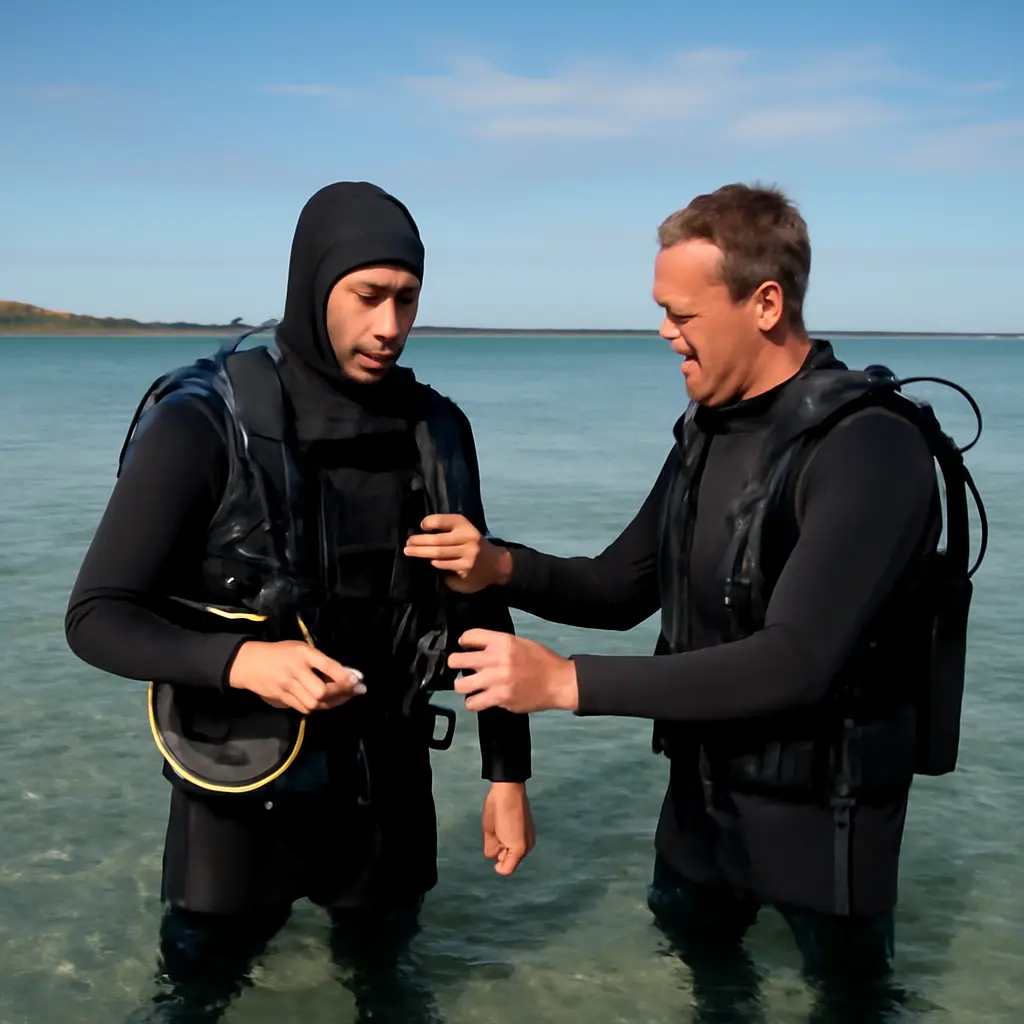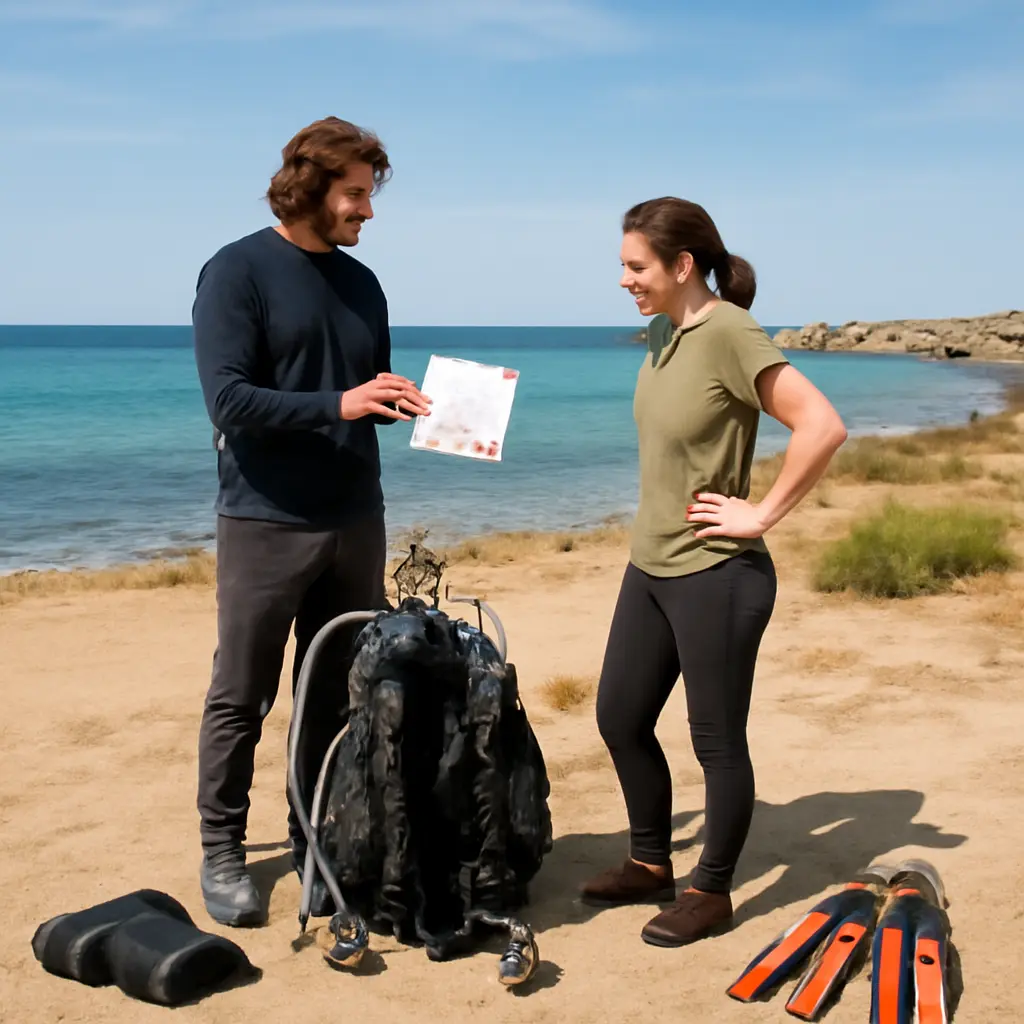
Scuba diving is underwater swimming with a self-contained breathing apparatus (SCUBA), which lets a diver breathe from a tank rather than return to the surface for each breath. Your first experience is usually a supervised “Discover Scuba Diving” session or a beginner course: expect a safety briefing, equipment fitting, basic skills practice, and a closely guided dive. The Professional Association of Diving Instructors (PADI) describes its introductory experience as a shallow, instructor-supervised session, while the National Oceanic and Atmospheric Administration (NOAA) stresses that divers need appropriate training and equipment because pressure changes and breathing underwater introduce real risks. Knowing what happens before, during, and after the dive can help you prepare, communicate comfortably, and decide whether to pursue certification.
First scuba diving experience: what it involves
A first scuba experience is a planned introduction to breathing underwater and moving with scuba equipment under direct professional supervision. It is not the same as independently certified diving: the instructor controls the setting, reviews essential skills, and stays close while you adapt. Conditions vary by operator, location, participant, and program, so confirm the actual depth, duration, health requirements, and supervision arrangements before booking.
Introductory dive versus certification course
An introductory dive offers a limited, supervised sample of scuba, often after a short lesson and practice in a pool or calm, shallow water. A certification course is more comprehensive: it typically includes independent study, confined-water training, and open-water dives, followed by an assessment of required knowledge and skills. PADI and Scuba Schools International (SSI) both distinguish try-diving experiences from entry-level certification programs. Completing an introductory session does not, by itself, qualify you to dive without professional supervision.
Who can participate and what to check
Eligibility depends on the program and local rules. For example, PADI’s Discover Scuba Diving program sets a minimum age of 10, but age limits and conditions can differ among operators and jurisdictions. Participants generally need to be comfortable in the water and able to follow instructions; strong swimming ability is useful, though the exact requirement depends on the experience offered. You will usually complete a medical questionnaire. Disclose relevant health conditions, medications, recent illness, or concerns honestly, and seek advice from a qualified medical professional if the questionnaire or operator indicates it is needed. Do not dive when ill, impaired, or unable to equalize pressure comfortably.
Preparation shapes a safe first scuba dive
Preparation means more than arriving at the dive site: it includes checking your health, understanding the plan, and making sure the equipment fits and works. Divers Alert Network (DAN), a nonprofit organization focused on dive safety and research, emphasizes conservative decisions and appropriate training. A calm briefing and a chance to ask questions help turn unfamiliar procedures into manageable steps.
Health, hydration, and timing
Tell the operator about relevant medical history before the activity, not just on the day if you can avoid it. Common concerns that may require medical review include heart or lung conditions, some ear or sinus problems, and medications that affect alertness or breathing. Follow the operator’s guidance on food, hydration, and activity, and avoid alcohol or recreational drugs before diving. After a dive, follow recognized guidance on flying; DAN commonly advises waiting at least 12 hours after a single no-decompression dive and 18 hours after multiple dives or multiple days of diving, while noting that longer waits may be prudent and specific circumstances matter. Follow the dive operator’s and training agency’s current instructions.
Equipment fitting and the briefing
A typical introductory setup includes a mask, fins, buoyancy control device (BCD), regulator, tank, and exposure protection such as a wetsuit. The regulator delivers air from the tank; the BCD helps you manage buoyancy; and the mask creates an air space so you can see underwater. Your instructor should explain how the gear works, check its fit, and demonstrate basic procedures, including how to communicate with hand signals and what to do if water enters your mask or you need to end the dive. Speak up if anything feels uncomfortable or unclear.
Pressure, breathing, and equalization
As you descend, water pressure increases, affecting air spaces in your ears and mask. Divers learn to equalize early and gently, following their instructor’s directions; never force equalization or continue descending through ear pain. Breathe continuously and normally through the regulator—never hold your breath while ascending, because expanding air in the lungs can cause serious injury. NOAA’s diving safety guidance highlights pressure-related hazards and the importance of proper training, controlled ascents, and suitable equipment.
During the first dive, expect gradual skill-building
The underwater portion usually begins slowly. Your instructor may first help you get used to breathing through the regulator in shallow water, then practice a few basic skills before guiding you on a short route. The goal is not to cover distance or reach a particular depth; it is to remain comfortable, follow the plan, and communicate promptly.
Shallow-water practice and basic skills
Depending on the program and site, you may practice clearing a partly flooded mask, recovering a regulator, checking your air supply, and using hand signals. These are introductory skills, not a guarantee that every participant will perform every exercise in the same way. Your instructor should demonstrate each task, supervise closely, and adjust the pace to your comfort. If you feel anxious, pause, signal your instructor, and return to a simpler step rather than pushing on.
Buoyancy, movement, and communication
Buoyancy is the ability to control whether you float, hover, or descend. Beginners often need time to coordinate breathing, fin movement, and BCD adjustments, so small, deliberate movements are more useful than hurried kicking. Keep close to the instructor, avoid touching marine life or the seabed, and use the agreed hand signals. Many introductory experiences take place in a pool or shallow water; open-water conditions may add waves, current, visibility changes, or cooler temperatures, so ask in advance what to expect.
A simple dive-plan visual
A useful way to picture the experience is as a sequence: briefing and equipment check → shallow-water adjustment → supervised skills → guided exploration → controlled return and post-dive check. This is a planning aid, not a substitute for the instructor’s briefing or a promise about a particular program’s schedule.
Safety decisions continue after surfacing
A responsible first dive includes knowing when to stop, how to report discomfort, and what to do afterward. The U.S. Centers for Disease Control and Prevention (CDC) notes that scuba-related pressure changes can cause injuries, including decompression sickness and ear or sinus barotrauma. Serious problems are not the expected outcome of a properly planned introductory session, but safe behavior and prompt reporting matter.
When to pause or end the dive
Signal the instructor if you feel frightened, unusually short of breath, dizzy, cold, nauseated, or unable to equalize. Ear or sinus pain is a reason to stop descending and follow the instructor’s directions, not to push through. The instructor may pause, change the plan, or end the dive; that is a normal safety decision, not a failure. Never separate from the group or attempt an unplanned ascent on your own unless an immediate emergency requires it.
After the dive and warning signs
After surfacing, remove equipment with assistance as needed, drink water if appropriate, and tell the instructor about any discomfort. Seek urgent medical care for concerning symptoms after diving, such as difficulty breathing, weakness, numbness, confusion, severe pain, or unusual skin changes. DAN recommends contacting emergency services and its emergency hotline when a diving-related emergency is suspected; do not delay evaluation while waiting to see whether serious symptoms go away. For ordinary post-dive planning, respect the recommended interval before flying or traveling to altitude.
Choosing an operator and deciding what comes next
A good first experience depends on the quality of supervision as much as on the destination. Ask who will teach you, how many participants will be in the group, where the session takes place, what equipment is included, and how the operator handles medical disclosures and changing conditions. Certification agencies, including PADI and SSI, maintain instructor and dive-center directories; verify credentials and ask how the specific session is structured rather than relying on marketing language alone.
Questions to ask before booking
- Is the session in a pool, sheltered water, or open water, and what is the planned maximum depth?
- What training and experience does the instructor have, and how closely will participants be supervised?
- What health screening, age limits, and swimming or water-comfort expectations apply?
- What equipment, transport, and safety support are included, and what happens if weather or water conditions change?
- How long should I wait before flying, and whom should I contact if I feel unwell afterward?
From a try-dive to certification
If you enjoy the experience, an entry-level certification course is the next step toward diving with a qualified buddy within the limits of your training. Courses commonly combine knowledge development, confined-water skill practice, and open-water training dives. A try-dive can help you decide whether you like the sensation of breathing underwater, but it does not replace those course components. Ask the instructor which certification program is appropriate and what additional training is needed for local conditions.
Conclusion: a first scuba experience should be supervised and unhurried
Your first scuba dive is an introduction to equipment, breathing underwater, pressure management, and communication—not a test of bravery or athletic ability. A clear briefing, suitable health screening, well-fitted gear, shallow practice, and attentive supervision help make the experience more comfortable and safer. Follow the instructor’s plan, stop or speak up when something feels wrong, and observe post-dive guidance, including advice about flying. Before booking, compare operators and ask specific safety questions; if you want to dive independently with a buddy later, pursue a recognized certification course.
Sources: Professional Association of Diving Instructors (PADI), Discover Scuba Diving, https://www.padi.com/courses/discover-scuba-diving; PADI, Open Water Diver Course, https://www.padi.com/courses/open-water-diver; National Oceanic and Atmospheric Administration (NOAA), Diving Safety, https://oceanservice.noaa.gov/education/tutorial_corals/coral06_diving.html; Divers Alert Network (DAN), Flying After Diving, https://dan.org/health-medicine/health-resources/diseases-conditions/flying-after-diving/; DAN, Emergency Hotline, https://dan.org/emergency-hotline/; U.S. Centers for Disease Control and Prevention (CDC), Yellow Book: Scuba Diving, https://www.cdc.gov/yellow-book/hcp/environmental-hazards-risks/scuba-diving.html; Scuba Schools International (SSI), Try Scuba, https://www.divessi.com/en/try-scuba.