
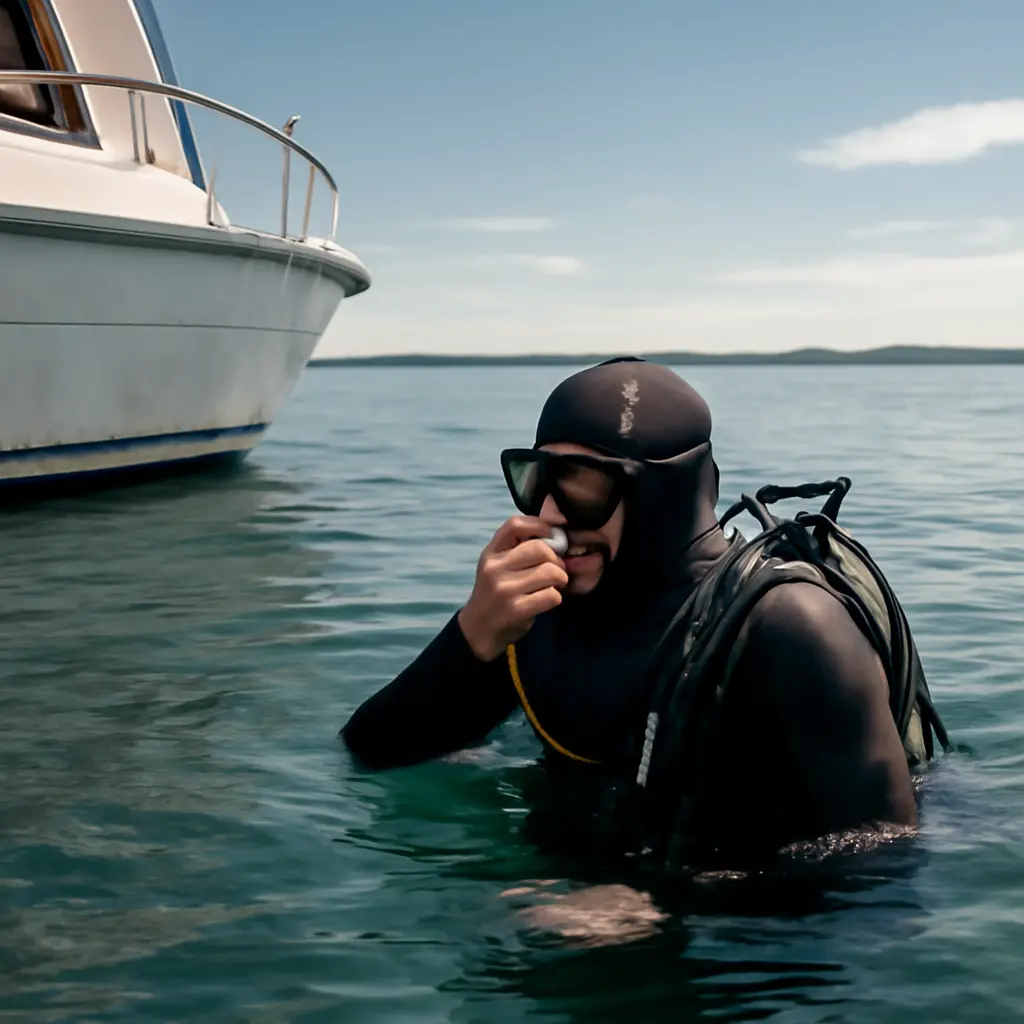
Equalization is the process of balancing pressure in the air spaces of the ears and sinuses with the surrounding water pressure. Professional divers never ignore it because pressure changes can injure the ears or sinuses, impair hearing and balance, and force a dive to end early. The safest approach is to equalize gently and early, keep doing so during descent, and stop or ascend if equalization becomes difficult. Understanding how pressure affects the body, which techniques divers use, what warning signs mean, and when to seek medical care helps explain why this routine is a core diving safety practice.
Pressure changes make diver equalization essential
Water pressure rises as a diver descends. The Divers Alert Network (DAN) explains that pressure increases by approximately one atmosphere for every 10 metres (33 feet) of seawater. At 10 metres, for example, a diver is exposed to roughly twice the surface pressure. This increasing pressure compresses gas-filled spaces, including the middle ear, unless air can move into them to keep pressure balanced.
The middle ear is connected to the back of the nose and throat by the Eustachian tubes. Equalization opens these tubes so air can enter the middle ear. If a diver descends without equalizing, the pressure difference can pull the eardrum inward and strain sensitive tissues. DAN describes middle-ear barotrauma as one of the most common injuries associated with diving.
The issue is not limited to discomfort. A pressure injury can cause pain, fluid or bleeding, temporary hearing loss, or dizziness. Vertigo underwater can be particularly hazardous because it may disorient a diver. Equalization is therefore both a way to protect the ears and a practical skill for maintaining control and completing a dive safely.
Diver equalization techniques balance pressure safely
In diving, equalization techniques are deliberate methods of moving air into pressure-sensitive spaces, especially the middle ear, as ambient pressure increases. DAN and recreational diver training organizations advise divers to equalize before discomfort begins and continue at short intervals during descent. The goal is not to force air through a blocked passage, but to balance pressure gently while the pressure difference is still small.
Common techniques include swallowing, moving the jaw, the Valsalva maneuver, the Toynbee maneuver, and the Frenzel maneuver. Divers may use different methods or combine them, but no technique should be painful or forceful. The right method depends on the diver’s anatomy, health, training, and ability to perform it reliably.
Early and frequent equalization
Early equalization means balancing pressure at the surface or as soon as descent begins, before ear pressure or pain develops. Divers then repeat the action frequently, particularly during the first metres of descent, where pressure changes are proportionally most noticeable. A controlled, feet-first descent can also make it easier to pause and respond to any difficulty.
Equalizing early matters because a large pressure difference can make the Eustachian tubes harder to open. If a diver waits until pain starts, repeated effort may be less effective and can injure the ear. Training agencies commonly teach divers to stop descending if they cannot equalize, rise slightly until the discomfort eases, and try gently again. If equalization still fails, the safe choice is to end the descent or the dive.
Swallowing, jaw movement, and gentle maneuvers
Swallowing and moving the jaw can help open the Eustachian tubes naturally. Some divers swallow repeatedly, yawn gently, or move the jaw from side to side. These actions may be sufficient for divers whose tubes open easily, and they do not require pinching the nose or building strong pressure.
The Valsalva maneuver involves gently pinching the nose, closing the mouth, and exhaling lightly against the closed airway. The Toynbee maneuver uses a pinched nose combined with swallowing. The Frenzel maneuver closes the back of the throat and uses the tongue and throat muscles to compress a small amount of air. These techniques are not interchangeable for every diver; instruction and practice help divers identify a method they can perform without straining.
Sinus and mask pressure equalization
The sinuses are air-filled cavities in the skull that usually equalize through narrow openings connected to the nasal passages. Congestion, inflammation, or anatomical narrowing can block those openings. A diver may then feel facial pressure or pain during descent or ascent. There is no safe way to force a blocked sinus to equalize; divers should postpone diving when congestion prevents normal pressure balancing.
A diving mask also contains an air space. Divers equalize it by exhaling a small amount of air through the nose into the mask during descent. Without this step, pressure can draw the mask against the face, causing discomfort or a mask squeeze. This is distinct from middle-ear equalization, but it follows the same principle: gas spaces must adjust to changing ambient pressure.
Warning signs show when divers should stop descending
Pressure, fullness, or mild discomfort can signal that equalization is needed. Sharp or worsening pain, inability to clear one or both ears, sudden hearing changes, ringing, fluid or blood, and dizziness are warning signs to take seriously. Divers should not continue downward while struggling to equalize or try to overcome a blockage with repeated forceful attempts.
A safe response is to stop, signal a buddy, ascend slightly until pressure eases, and try a gentle method. If the problem persists, the diver should abandon the descent and follow training for a controlled return. After diving, persistent pain, hearing loss, discharge, or vertigo warrants medical assessment, preferably from a clinician familiar with diving medicine. DAN cautions that symptoms can indicate barotrauma and should not be dismissed simply because they seem mild at first.
Health, preparation, and training support reliable equalization
A cold, allergy flare, sinus infection, or other nasal congestion can obstruct the passages needed for equalization. Divers should avoid diving when they cannot clear their ears comfortably on land or have significant congestion. Some medicines can affect alertness or may wear off during a dive; divers should ask a qualified medical professional about medication rather than relying on a decongestant to make an unsafe dive possible.
Preparation also includes practicing techniques before entering the water, descending slowly, staying close to a buddy, and communicating early when something feels wrong. A diver with a history of repeated equalization problems, ear surgery, or prior pressure injury should seek advice from a physician with diving-medicine expertise before diving again. There is no single technique that makes every dive safe; conditions and individual anatomy matter.
The pressure relationship can be shown in a simple text chart: Surface, approximately 1 atmosphere; 10 metres of seawater, approximately 2 atmospheres; 20 metres, approximately 3 atmospheres. These approximate values illustrate why even a relatively shallow descent requires active attention to pressure changes.
Conclusion: consistent equalization protects divers
Professional divers treat equalization as a repeated safety practice, not a response to pain. Water pressure rises quickly during descent, and the ears, sinuses, and mask must adjust to that change. Early, frequent, gentle techniques help prevent pressure injury; stopping when equalization fails helps prevent a manageable problem from becoming a serious one.
Before your next dive, review equalization skills with a certified instructor, avoid diving when congestion blocks your ears or sinuses, and seek medical advice for persistent symptoms or recurring difficulty. For additional guidance, consult a recognized diver-training organization or DAN’s diving-medicine resources.
Sources: Divers Alert Network, “Ears and Diving,” https://dan.org/health-medicine/health-resources/diseases-conditions/ears-and-diving/; Divers Alert Network, “Middle-Ear Barotrauma,” https://dan.org/health-medicine/health-resources/diseases-conditions/middle-ear-barotrauma/; Divers Alert Network, “Sinus Barotrauma,” https://dan.org/health-medicine/health-resources/diseases-conditions/sinus-barotrauma/; NOAA Ocean Exploration, “How Does Pressure Change with Ocean Depth?,” https://oceanexplorer.noaa.gov/facts/pressure.html; PADI, “Equalization,” https://www.padi.com/health/equalization


