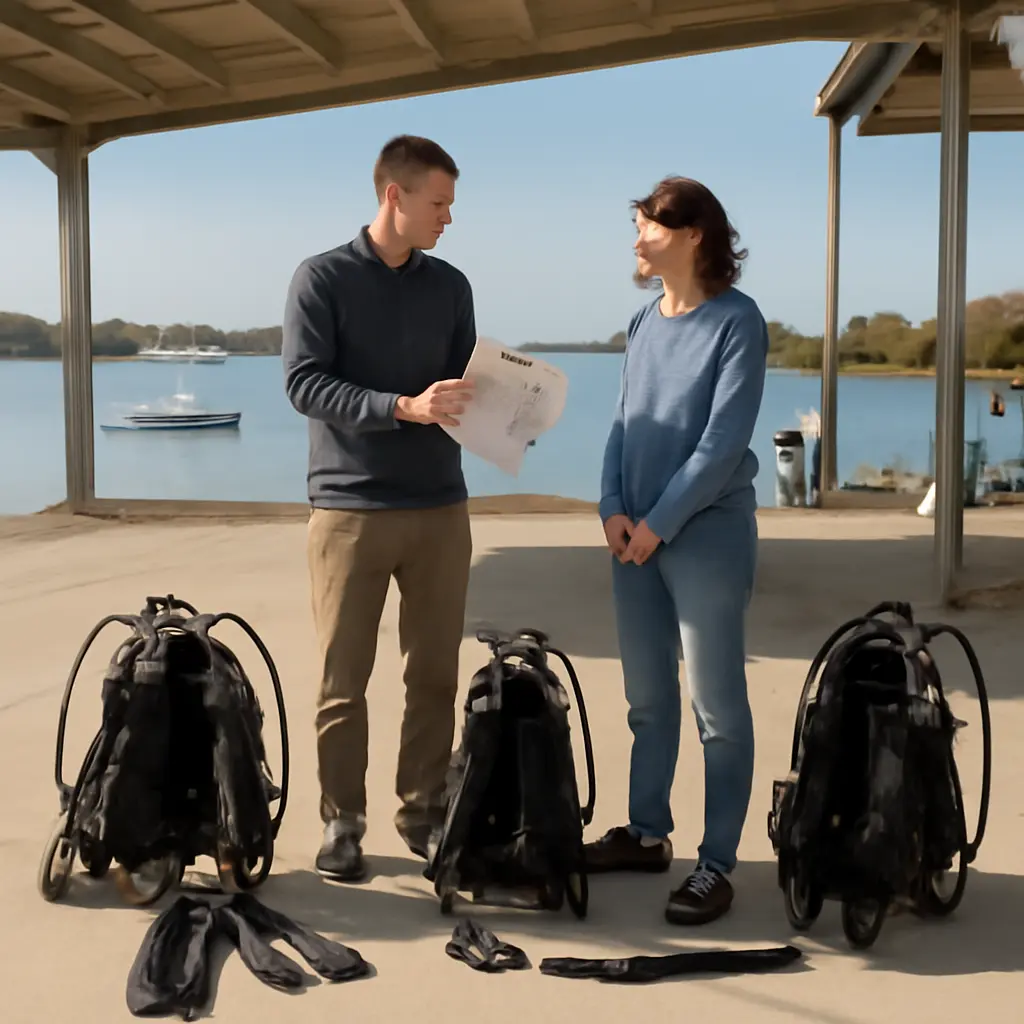
A scuba regulator is the life-support equipment that reduces high-pressure tank gas to breathable pressure and delivers it to the diver. Packing a regulator in carry-on luggage can reduce the risk of loss, mishandling, or delay separating a diver from essential equipment, but it does not guarantee acceptance: airline baggage rules, security screening, and the destination country’s requirements still apply. The practical approach is to protect the regulator, check current airline and airport rules, and keep any required documentation accessible—while remembering that a regulator alone does not make a diver ready to dive.
Carry-on packing protects regulator availability
Regulator carry-on packing is the practice of transporting a scuba regulator in a cabin bag rather than placing it in checked baggage. The aim is to keep a costly, safety-critical component with the traveler and limit exposure to baggage loss, rough handling, and delivery delays. The U.S. Transportation Security Administration (TSA) lists scuba regulators as permitted in carry-on and checked bags, while emphasizing that the final decision rests with the officer at the checkpoint. Permission to bring an item through screening is not the same as permission to exceed an airline’s cabin-bag size or weight limit.
The risk is practical as well as financial. The U.S. Department of Transportation’s Air Travel Consumer Reports track mishandled baggage, including bags that are delayed, damaged, pilfered, or lost. Those reports do not isolate scuba equipment, so they cannot establish a regulator-specific loss rate; they do support the broader reason to keep essential, hard-to-replace gear close when rules allow. A sensible packing plan therefore combines carry-on protection with a fallback plan for the rest of the dive kit.
Why the regulator merits special handling
A regulator assembly commonly includes a first stage, second stage, alternate air source, and low-pressure inflator hose. The first stage connects to the cylinder valve and reduces cylinder pressure; the second stage supplies breathing gas on demand. Some setups also include an instrument console, hoses, or a transmitter. These components can be vulnerable to impact, compression, contamination, and bending, making a padded case preferable to loose packing.
Divers Alert Network (DAN) explains that scuba regulators are life-support equipment and should be inspected and serviced according to the manufacturer’s recommendations. Carrying one’s own familiar, maintained regulator can be useful when traveling, but it does not replace a pre-dive check or a qualified service technician. If a regulator is damaged, contaminated, or behaving abnormally, do not dive with it merely because the trip schedule is tight.
Carry-on permission is not a boarding guarantee
TSA guidance permits scuba regulators in cabin baggage, but screening officers may inspect an item and make the final checkpoint decision. Airlines separately set cabin-bag dimensions, weight limits, and personal-item allowances, and these vary by carrier, fare, aircraft, and route. International screening authorities may also apply different procedures. Check the rules for every airline and airport on the itinerary, including connecting flights, shortly before departure.
If the regulator has a transmitter, battery-powered computer, or other electronic accessory, check the applicable battery and electronics rules as well. Do not assume that a scuba regulator’s general screening status automatically covers every component packed alongside it.
Protecting regulators in carry-on luggage
Good regulator packing protects delicate parts without making the bag difficult to inspect. A purpose-built regulator bag or padded compartment can keep the first stage and second stages from striking hard objects. The goal is to prevent pressure on the hoses and mouthpieces, avoid sharp bends, and make the equipment easy to remove if a security officer requests inspection.
Prepare and cushion the equipment
Before packing, check the regulator for existing damage and ensure it is clean and dry. Follow the manufacturer’s instructions for any dust cap or protective cover; do not force a cap onto a connection or leave moisture and debris trapped inside. Coil hoses loosely in their natural curves instead of folding or tightly wrapping them. Cushion the first stage and second stages with soft padding, and keep heavy items such as books, cameras, or tools from pressing on the assembly.
Avoid using the regulator bag as a container for sharp tools or items that could puncture a hose. If the regulator is packed in a larger cabin bag, place it where it will not be crushed when the bag is placed under a seat or in an overhead bin. Where practical, carry the regulator in a separate, clearly identifiable padded case.
Make security screening straightforward
Keep the regulator accessible rather than burying it beneath tightly packed clothing. At the checkpoint, answer questions clearly and allow time for a possible inspection. A manufacturer’s manual or product identification can help explain unfamiliar equipment, though it cannot override an officer’s decision. Arriving early is especially helpful when traveling with bulky or unusual dive equipment.
Never conceal an item to avoid inspection. If a regulator or accessory is not accepted at the checkpoint, follow the officer’s instructions and the airline’s available options. Travelers should also avoid relying on a last-minute gate check for a bag containing critical equipment, since cabin-space decisions can change during boarding.
Managing the wider dive-travel risk
Keeping the regulator in the cabin reduces one category of risk, but dive trips depend on more than a regulator. Exposure protection, fins, masks, computers, and other equipment may still travel in checked baggage. A resilient plan separates essential items from replaceable ones and anticipates delays, baggage limits, and destination availability.
Use a split-bag strategy
A split-bag strategy places the regulator and other compact, high-value essentials in carry-on luggage while sending bulky gear in checked baggage. Keep medications, travel documents, and any required prescription items in accordance with airline and security rules. If baggage is delayed, contact the airline promptly, file a report, and retain receipts for reasonable purchases; the carrier’s process and compensation rules depend on the route and applicable law.
Before departure, ask the dive operator what rental regulators and other equipment are available, whether they can accommodate a delayed arrival, and how they handle pre-dive equipment checks. This is a contingency, not a reason to skip inspection: rental gear should be checked and fitted before use.
Check the destination and the complete itinerary
Rules may differ among airlines, airports, and countries. Verify cabin-bag dimensions and weight, security guidance, and any restrictions for batteries or electronic devices for every segment. If a connection involves a new screening checkpoint, allow enough time for re-screening. Save the relevant official guidance offline so it remains available if airport connectivity is poor.
Travel insurance and baggage coverage may help with some losses or delays, but policies often contain limits, exclusions, documentation requirements, and deadlines. Read the policy rather than assuming specialized dive equipment is fully covered. Photograph the regulator and record its make, model, and serial number before travel; keep purchase or service records separately from the packed gear.
Conclusion: carry the regulator, verify the rules, and plan for delays
Regulator carry-on packing is a practical way to reduce the chance that baggage disruption will leave a diver without a familiar, safety-critical component. TSA guidance allows scuba regulators in carry-on baggage, but checkpoint officers make final screening decisions and airlines control cabin-bag limits. Protective packing, accessible presentation, and checks for electronic accessories make the trip smoother; a split-bag strategy, operator rental plan, and documentation provide a fallback if other equipment is delayed.
Before leaving, confirm the current rules with every carrier and relevant security authority, pack the regulator in a padded case, and have the equipment inspected if its condition is uncertain. For further preparation, consult the TSA’s current scuba-equipment guidance, your airline’s baggage policy, your regulator manufacturer’s care instructions, and DAN’s equipment-safety resources.
Sources: Transportation Security Administration, “Scuba Equipment,” https://www.tsa.gov/travel/security-screening/whatcanibring/items/scuba-equipment; U.S. Department of Transportation, “Air Travel Consumer Reports,” https://www.transportation.gov/airconsumer/air-travel-consumer-reports; Divers Alert Network, “Regulator Maintenance,” https://dan.org/health-medicine/health-resources/diseases-conditions/regulator-maintenance/