Buoyancy control is a diver’s ability to regulate how much they float or sink; mastering it means maintaining a stable neutral hover without contacting the seabed or reef. For coral reefs, this is practical conservation: the National Oceanic and Atmospheric Administration (NOAA) warns that careless finning and contact can break or damage delicate coral, while the Great Barrier Reef Marine Park Authority recommends maintaining buoyancy and avoiding contact with marine life. This guide explains neutral buoyancy, the equipment and skills that support it, a step-by-step hover method, and ways to apply the skill around fragile reef structures.
Neutral Buoyancy Defines Buoyancy Control Mastery
Neutral buoyancy is the state in which a diver neither rises nor sinks when breathing normally and remaining still. In diving practice, it is achieved by balancing the diver’s weight and displaced water with the buoyant force of the body, exposure suit, and buoyancy-control device (BCD). The Professional Association of Diving Instructors (PADI) describes buoyancy control as a core scuba skill that helps divers maintain position, conserve energy, and avoid damaging the underwater environment.
Buoyancy is not a single fixed setting: it changes with depth, breathing, equipment, and the amount of air in a diver’s BCD. As pressure increases during descent, gas spaces compress; as pressure decreases during ascent, they expand. Divers therefore make small adjustments and monitor their depth rather than expecting one BCD setting to work everywhere.
Positive, Negative, and Neutral Buoyancy
Positive buoyancy causes a diver to rise, negative buoyancy causes a diver to sink, and neutral buoyancy allows a diver to hold depth. A controlled descent may begin with slight negative buoyancy, while a safety stop or reef observation calls for a stable neutral hover. These are related states within buoyancy control, not separate equipment modes: breathing and small BCD adjustments can shift a diver between them.
Why Neutral Hovering Protects Coral
Coral colonies can be damaged by direct contact from hands, fins, gauges, cameras, or equipment. NOAA’s coral-reef guidance advises divers to avoid touching or standing on coral and to keep fins from stirring sediment. Sediment can reduce light reaching corals and may smother living tissue when it settles. A diver who can hover with room to spare is less likely to brush a colony or disturb the reef while adjusting position.
The ecological stakes are substantial. The United Nations Environment Programme has reported that coral reefs support at least 25% of marine species, despite occupying a very small fraction of the ocean floor. Careful diving cannot address major pressures such as warming and ocean acidification, but it can reduce avoidable, local physical damage.
Equipment and Breathing Shape Buoyancy Control Mastery
A neutral hover depends on a balanced system: correctly selected weights, a well-fitting exposure suit, a functioning BCD, and calm breathing. PADI training materials emphasize correct weighting and controlled breathing because excess lead can make a diver rely on more BCD air, increasing buoyancy changes as depth varies. The practical goal is not to carry the most weight, but to carry only what is required for safe control with the equipment being used.
Weighting and Exposure Suits
A wetsuit’s trapped gas makes a diver more buoyant near the surface, and suit material compresses as depth increases. Dry suits also contain gas that must be managed as depth changes. Weight requirements therefore vary with suit thickness, body composition, cylinder type, and whether a diver is in fresh or salt water. A proper buoyancy check should be conducted with an instructor or qualified dive professional, using the diver’s actual equipment and the agency’s training procedures.
BCD, Cylinder, and Trim
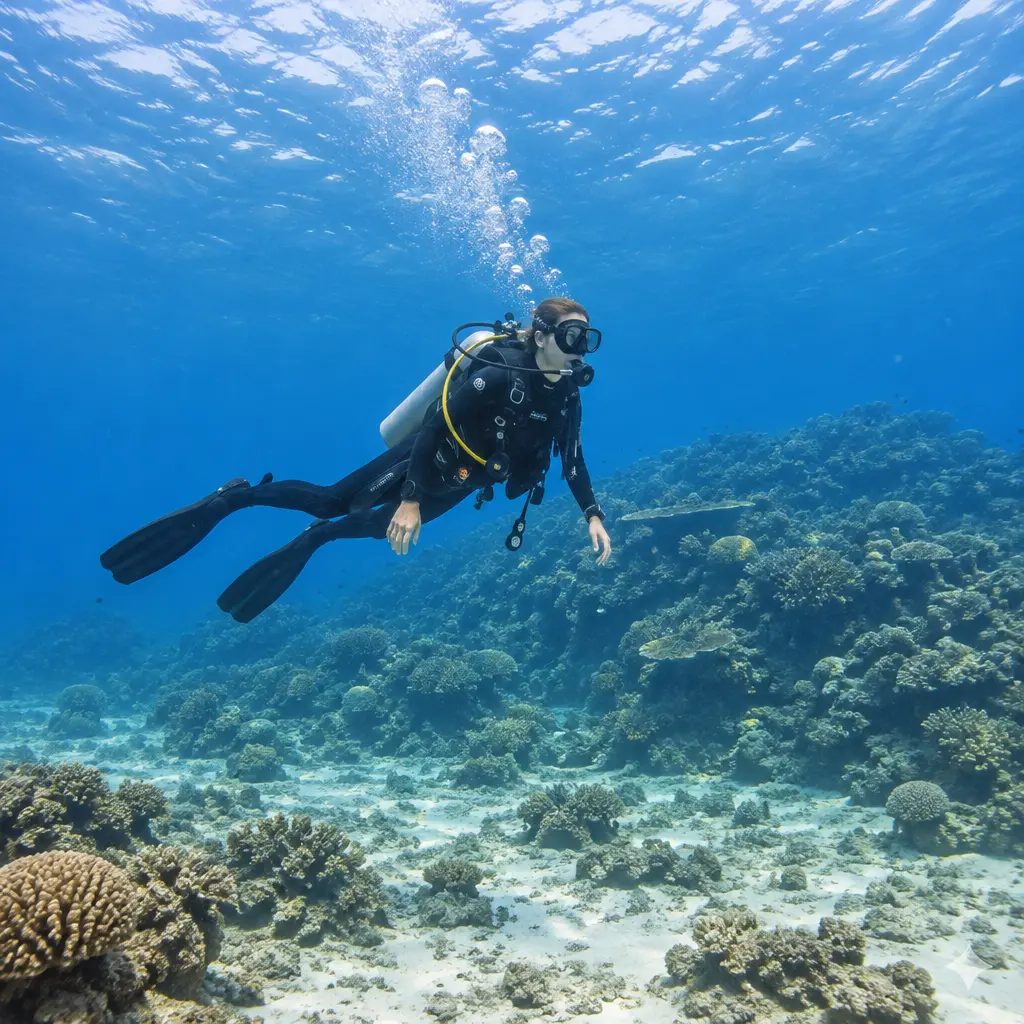
The BCD controls buoyancy by adding or releasing gas; it is not a substitute for correct weighting or precise body position. Cylinder buoyancy also changes during a dive as breathing reduces the gas supply. Trim describes the diver’s orientation in the water—horizontal, head-up, or feet-down—and affects how easily the diver can remain clear of the reef. A streamlined horizontal trim, with hoses and accessories secured, reduces the chance of accidental contact.
Breathing and Small Adjustments
Breathing produces small, continuous buoyancy changes: inhaling increases lung volume and lift, while exhaling reduces it. Divers can use relaxed breathing to make fine position adjustments, but should not hold their breath. PADI and other diver-training organizations teach continuous breathing and controlled buoyancy management as fundamental safety practices. BCD changes should be brief and deliberate; large bursts of air can create an unwanted ascent or descent.
A Neutral-Hover Routine Builds Buoyancy Control Mastery
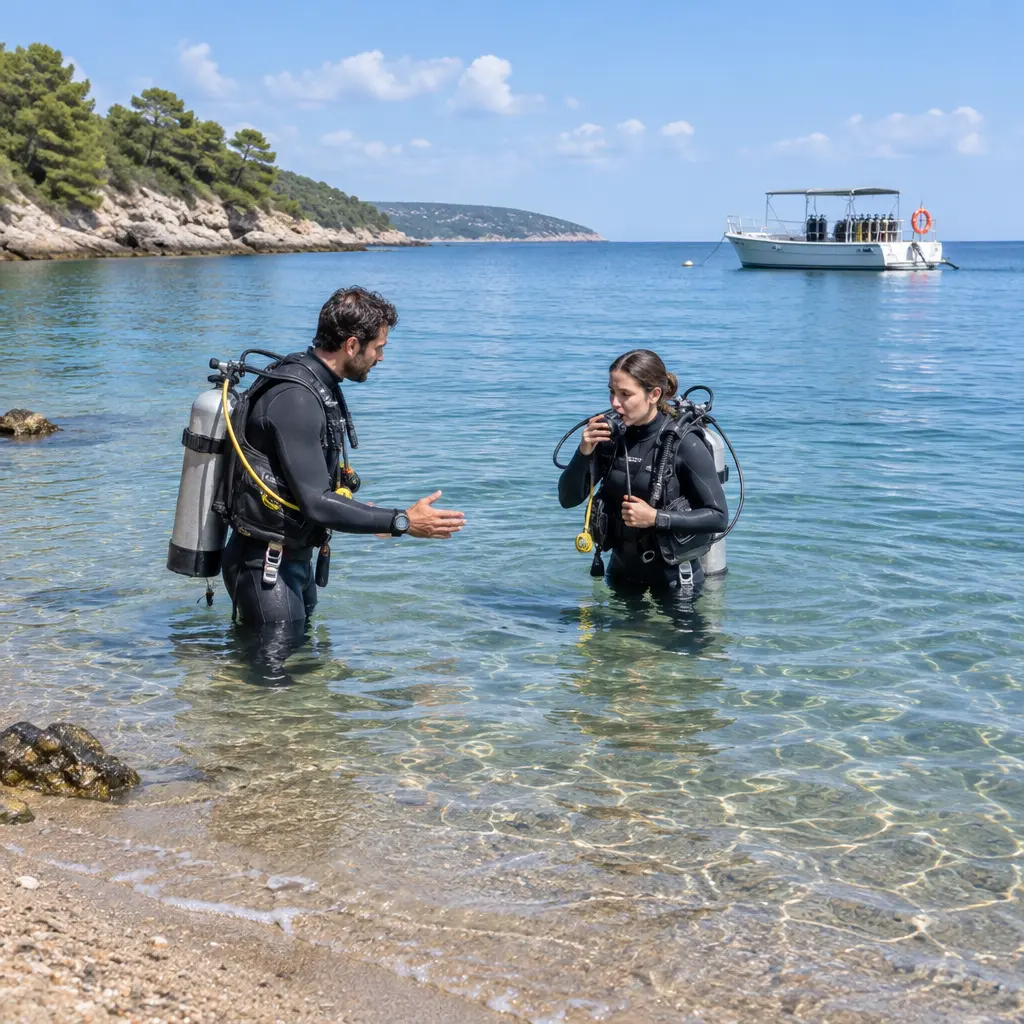
A reliable hover is developed in a low-impact training area before it is attempted beside coral. Divers should practice under the supervision of an instructor when learning or changing equipment, and should follow their certification agency’s procedures. The routine below is a general skill framework, not a replacement for formal training.
1. Check Equipment and Establish a Safe Position
Before entering the water, secure gauges, alternate air sources, cameras, and dangling accessories. Confirm that the BCD and weights are fitted correctly, then choose an open-water practice location with ample clearance from the bottom and marine life. A sandy or otherwise robust training area is preferable to a coral garden, while care should still be taken not to stir sediment.
2. Descend Slowly and Settle at the Practice Depth
Descend with a controlled rate and equalize as taught in training. At the chosen depth, pause and allow the body and equipment to settle. Add or release small amounts of gas from the BCD as needed, then wait for the effect before making another adjustment. Because gas expands and contracts with depth, frequent large corrections can lead to an oscillation between rising and sinking.
3. Use Breath, Body Position, and Visual Cues
Adopt a horizontal position with knees bent and fins elevated, keeping hands close to the body. Breathe normally and observe whether the surrounding scene moves steadily up or down relative to the diver. Avoid using the reef or bottom as a handhold. If the diver begins to drift, correct the cause gently: adjust trim or breathing first when appropriate, and use a small BCD change only when needed.
4. Practice Stillness Before Approaching Coral
Build the skill by holding depth and position for short intervals, then gradually extend the hover. Once control is consistent, approach a reef slowly while maintaining a clear buffer from coral and other organisms. If a current, surge, or task load makes control unreliable, move away from fragile structures rather than trying to hold position by finning against the reef.
Reef-Safe Positioning Applies Buoyancy Control Mastery
Neutral buoyancy is most valuable when paired with awareness of surroundings. Reef-safe diving combines stable depth control with careful fin technique, good spacing, and respect for site rules. The Great Barrier Reef Marine Park Authority’s responsible-diving advice stresses avoiding contact with coral and marine animals; similar principles are used by reef managers and dive operators worldwide.
Maintain Clearance and Avoid Contact
Do not kneel, stand, or rest equipment on coral. Keep a deliberate distance that allows for surge and unexpected movement, and do not reach toward reef organisms for balance or a photograph. A camera adds task loading and can pull a diver forward or downward; practice camera handling in open water before using it near a reef.
Control Finning and Sediment
Fin strokes should be slow and directed so they do not strike coral or drive sediment over it. A modified frog kick can help keep thrust directed behind the diver, but no kick is automatically reef-safe in every setting. Divers should choose a technique suited to the space, avoid forceful strokes near the bottom, and refrain from using their hands to push off rocks or coral.
Adapt to Conditions and Dive-Site Rules
Current, surge, visibility, and crowding can make a hover more demanding. Follow the guide’s briefing, local marine-park regulations, and any no-entry or no-contact zones. If a diver cannot maintain a safe position, the responsible choice is to increase distance from the reef, signal the guide, or end the reef portion of the dive—not to grip the substrate.
Training and Monitoring Improve Buoyancy Control Mastery
Buoyancy improves through supervised practice, equipment familiarity, and honest review after dives. Training agencies offer buoyancy-focused courses and skills sessions; divers should choose a course appropriate to their certification and experience. Dive professionals can help identify common causes of instability, including excess weight, poor trim, misplaced equipment, and overcorrection with the BCD.
Use a Simple Practice Log
After each dive, record the exposure suit, cylinder, weight carried, approximate depth, and any difficulty holding position. Note whether the diver contacted the bottom, stirred sediment, or had to make repeated BCD adjustments. Over several dives, these observations can reveal patterns and help guide a professional weighting check. A chart can make the trend visible: plot depth stability or the number of corrective adjustments across practice sessions, while recognizing that conditions differ from dive to dive.
Treat Safety as Part of Reef Protection
A diver who is distracted, cold, low on air, or task-loaded may lose buoyancy control. Plan the dive, monitor air and depth, maintain communication with the buddy, and follow ascent and safety-stop procedures taught in training. Reef protection never takes priority over immediate diver safety: if control deteriorates, move to a safer area and address the problem there.
Conclusion: Neutral Hovering Helps Protect Fragile Reefs
Buoyancy control mastery combines neutral buoyancy, appropriate weighting, exposure-suit and BCD management, calm breathing, and stable trim. A deliberate practice routine helps divers hold depth, while reef-safe positioning and controlled finning reduce the risk of breaking coral or stirring sediment. Because reefs support a remarkable share of marine life yet face serious environmental pressures, preventing avoidable diver contact is a meaningful part of responsible recreation.
Before your next reef dive, review your equipment, practice hovering in a suitable open area, and ask a qualified instructor or guide for feedback. For further guidance, consult your training agency and the local marine-park authority, and follow site-specific conservation rules.
Sources: National Oceanic and Atmospheric Administration, How to Dive and Snorkel Responsibly, https://oceanservice.noaa.gov/ocean/earthday.html; Professional Association of Diving Instructors, Peak Performance Buoyancy, https://www.padi.com/courses/peak-performance-buoyancy; Great Barrier Reef Marine Park Authority, Responsible reef practices, https://www.gbrmpa.gov.au/; United Nations Environment Programme, Coral reefs, https://www.unep.org/topics/ocean-seas-and-coasts/coral-reefs