Scuba diving without certification is possible in limited, supervised settings, but it is not the same as independently planning and conducting a scuba dive. Beginners can often try scuba through an instructor-led experience, while certification is generally needed to rent equipment, join ordinary guided dives, or dive without direct professional supervision. The distinction matters: the Professional Association of Diving Instructors (PADI) reports that its entry-level Open Water Diver course includes knowledge development, confined-water training, and open-water dives, while the U.S. Divers Alert Network (DAN) emphasizes that training and conservative decisions help divers manage underwater risks. Here is what uncertified beginners can do, what they should not do, and how to choose a safe next step.
Supervised scuba experiences define diving without certification
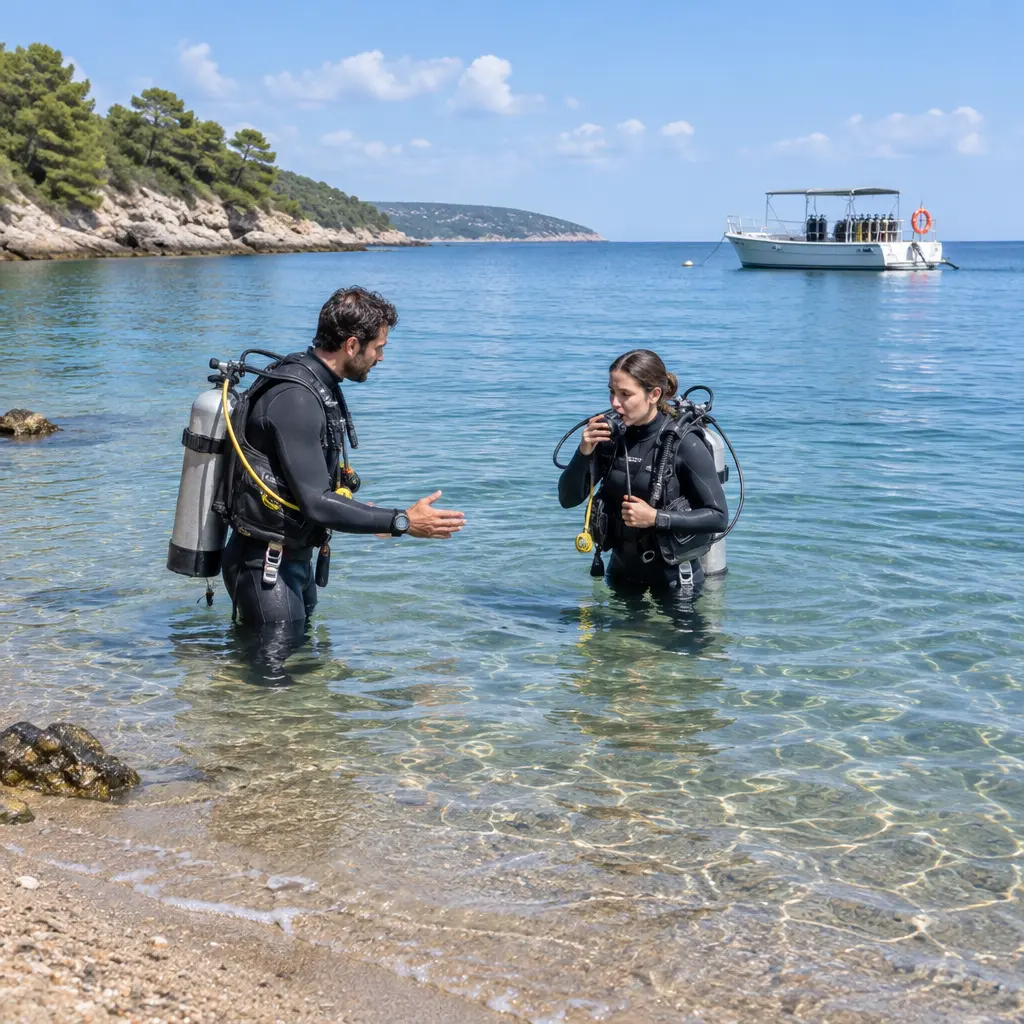
“Scuba diving without certification” can mean trying scuba under an instructor’s direct supervision, rather than diving independently or as a regular certified customer. PADI’s Discover Scuba Diving program, for example, is an introductory experience—not a certification course—and uses an instructor to brief participants and supervise them in a pool or a suitable open-water setting. Exact eligibility, depth limits, and conditions depend on the training agency, local rules, and the operator.
This distinction is important because scuba equipment does not make a person capable of handling every underwater problem. Divers need to understand buoyancy, pressure changes, breathing equipment, communication, and emergency procedures. Certification courses teach and assess those skills over time; a brief try-dive offers a supervised introduction, not equivalent preparation.
An instructor-led try-dive is the main uncertified option
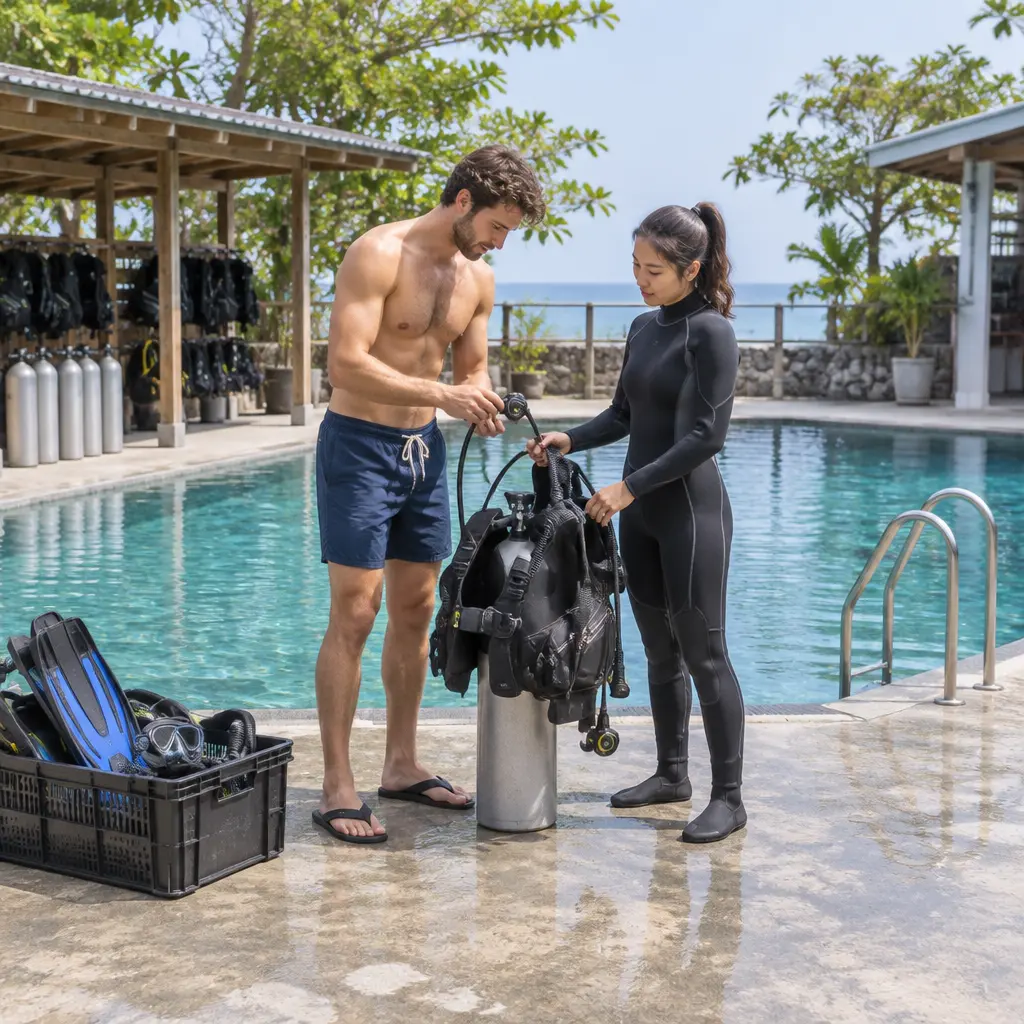
A try-dive is a short, structured experience in which an instructor explains basic equipment and safety procedures, then stays close while the participant uses scuba. It may take place in a swimming pool or, where permitted and appropriate, in open water. Participants should follow the instructor’s instructions, stay within the designated area, and end the activity if they feel uncomfortable.
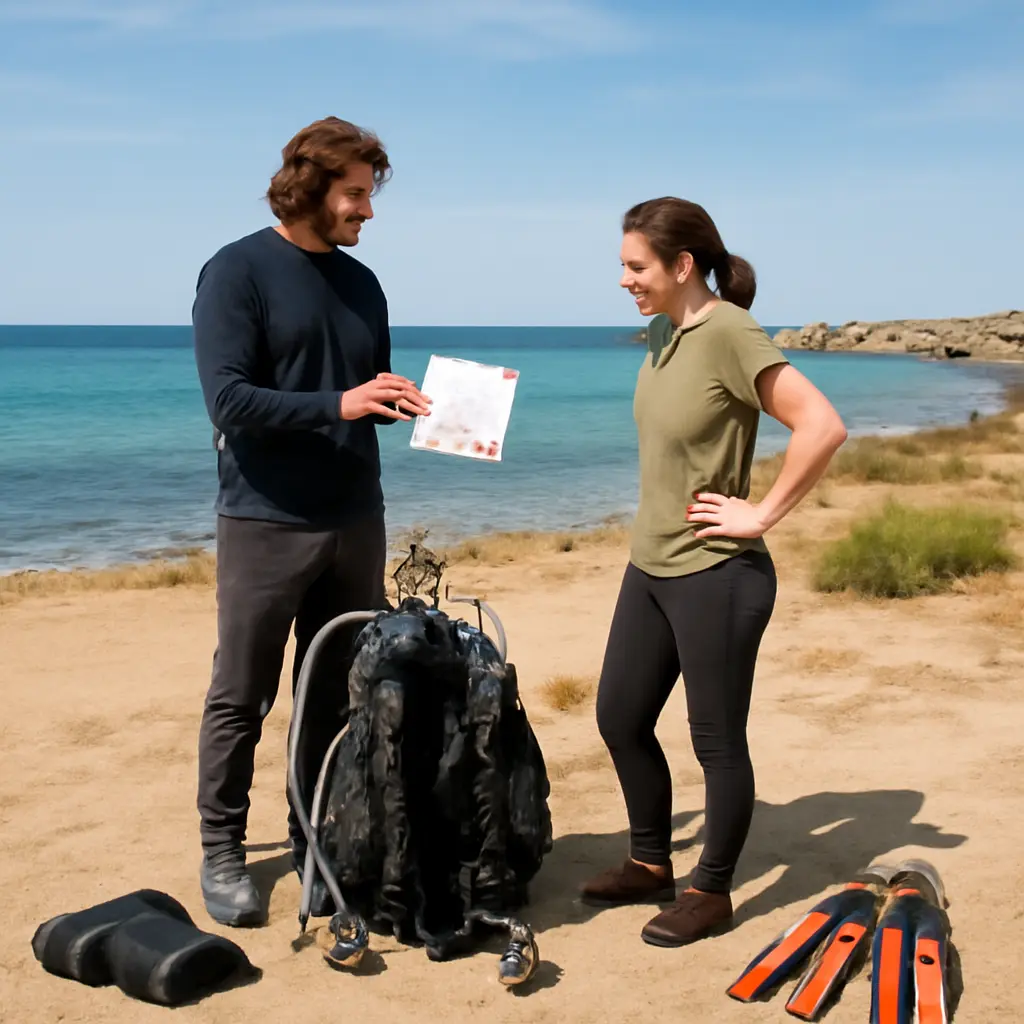
Before booking, ask whether the experience is conducted by a recognized training organization, what the maximum depth and group size are, and whether the instructor will be in the water with you. Also disclose relevant health conditions and medications honestly. The World Recreational Scuba Training Council (WRSTC) publishes minimum training standards used by participating agencies, but operators and jurisdictions may apply additional requirements.
Certification is different from a supervised introduction
An entry-level certification is a course that combines classroom or independent knowledge development, confined-water practice, and open-water training dives. PADI describes its Open Water Diver course as training that prepares students to dive with a buddy to a maximum depth of 18 metres (60 feet), subject to the student’s training, conditions, and local rules. Other agencies set their own course structures and standards.
A try-dive does not grant those course credentials or the usual privileges of a certified diver. In practice, many dive operators and equipment-rental businesses require proof of certification for ordinary recreational dives or rentals. Policies vary, so check directly with the operator rather than assuming a supervised introductory experience will qualify.
Certification requirements shape where beginners can dive
There is no single worldwide rule that makes certification legally mandatory for every recreational scuba dive. Requirements instead come from a mix of local regulations, training-agency standards, insurance conditions, and the policies of dive shops, boat operators, and sites. The practical result is that a beginner may be able to try scuba with an instructor but usually cannot simply rent equipment and join a standard dive without appropriate training.
The main categories are supervised introductory experiences, formal certification courses, and independent or guided dives for already-qualified divers. They differ in who controls the dive, how much training is required, and what the participant is allowed to do.
Supervised introductory dives
These are designed for people who have not yet earned a certification. The instructor selects a suitable environment, explains essential procedures, and supervises the participant directly. The experience is intentionally limited; it should not be treated as permission to dive later without an instructor or to exceed the briefing’s depth and location restrictions.
Training dives and entry-level certification
Training dives are part of a recognized course and are conducted under the supervision of an instructor or other qualified training professional. Students practice skills and demonstrate knowledge before receiving certification. PADI’s stated 18-metre (60-foot) maximum for Open Water Divers is a familiar example of a training-agency limit; it is not a universal depth allowance for every beginner or every condition.
Guided dives for certified divers
A guided dive is generally a recreational dive led by a divemaster or instructor for appropriately certified participants. A guide can help with navigation and local knowledge, but does not replace a diver’s training or make a dive suitable for someone who lacks the required certification. Operators may also check recent experience, certification level, and specialized qualifications for deeper, overhead, or otherwise demanding dives.
Training and risk management protect beginner divers
Scuba diving involves risks that are manageable but not eliminated by supervision. Pressure changes, equipment problems, poor buoyancy control, panic, and environmental hazards can become serious underwater. DAN’s annual diving incident and safety reporting examines fatalities and injuries to identify contributing factors; its analyses reinforce the value of training, health screening, planning, and conservative choices. Incident reports do not mean every dive is dangerous, but they show why beginners should not treat scuba as an activity to improvise.
Safe participation starts with choosing an appropriate experience and being candid about health and comfort. It also means recognizing that a professional’s presence does not remove the participant’s responsibility to listen, communicate, and stop when something feels wrong.
Health screening and medical readiness
Scuba can place demands on the heart and lungs, and some conditions or medications may affect a person’s ability to dive safely. Training agencies use medical screening questionnaires to identify issues that may require a physician’s evaluation. Answer screening questions accurately, and do not dive if an operator or medical professional advises against it. A history of illness is not automatically disqualifying, but it should be assessed by someone qualified to evaluate fitness for diving.
Pressure, buoyancy, and environmental hazards
As a diver descends, surrounding pressure increases, so divers must learn to equalize appropriately and follow safe ascent practices. Buoyancy control helps prevent uncontrolled ascents or descents and reduces accidental contact with reefs and other fragile environments. Currents, cold, limited visibility, boat traffic, and marine life add local considerations. A responsible instructor chooses conditions suited to the participant’s experience and explains how to respond to foreseeable hazards.
How to check a dive operator
A reputable operator should explain the experience clearly, assess participant readiness, provide well-maintained equipment, and describe emergency procedures. Ask who will supervise you, whether the activity is in confined or open water, what depth and conditions to expect, and what happens if you want to stop. If the briefing feels rushed, health concerns are dismissed, or you are pressured to continue, choose another provider.
A beginner’s next step is a supervised try or a full course
For someone curious but uncertain, an instructor-led introductory experience can offer a controlled first look at breathing underwater. Someone who wants to dive repeatedly, travel with dive operators, or participate with a buddy should consider an entry-level certification course. The right choice depends on personal goals, health, schedule, and the training available locally—not on a desire to bypass instruction.
Before deciding, compare recognized training agencies and local dive centers, confirm what a course includes, and ask how the instructor handles different learning needs. Certification is the beginning of a diver’s education, not a guarantee that every dive is appropriate; divers still need to stay within their training and experience.
Conclusion: Uncertified scuba is limited to supervised experiences
You can try scuba without certification in some settings, but only through an appropriately supervised introductory experience and within its limits. Certification courses provide broader skills and qualifications, while dive operators commonly require certification for standard guided dives and equipment rental. Because health, pressure, buoyancy, and environmental conditions all matter, beginners should choose a reputable instructor, disclose relevant medical information, and avoid diving independently without training. If scuba is more than a one-time curiosity, contact a recognized local training center and ask about an entry-level course.
Sources: PADI, Discover Scuba Diving, https://www.padi.com/courses/discover-scuba-diving; PADI, Open Water Diver Course, https://www.padi.com/courses/open-water-diver; World Recreational Scuba Training Council, Training Standards, https://wrstc.com/standards/; Divers Alert Network, Annual Diving Report, https://dan.org/safety-prevention/diver-safety/diving-incidents/annual-diving-report/; Divers Alert Network, Health and Diving, https://dan.org/health-medicine/health-resources/