Scuba diving feels different from swimming because it changes how your body moves, breathes, senses pressure, and relates to gravity. A scuba diver carries a breathing system, breathes compressed gas through a regulator, and descends into water where pressure rises with depth. Those differences affect buoyancy, breathing rhythm, sound, vision, and effort. The physics is measurable: seawater pressure increases by roughly one atmosphere for every 10 meters (33 feet) of depth, while buoyancy depends on displaced water and the volume of air in a diver’s equipment and lungs. Understanding these factors explains why diving can feel quiet and weightless yet also demands deliberate movement, controlled breathing, and careful attention to safety.
Scuba diving changes the body’s movement and breathing
Scuba diving is underwater activity in which a person uses a self-contained breathing apparatus—typically a cylinder, regulator, and buoyancy-control device—to breathe while submerged. The Professional Association of Diving Instructors (PADI) describes scuba as a system that supplies breathing gas from a cylinder through a regulator at the surrounding water pressure. Unlike a swimmer who must surface to breathe, a scuba diver can remain underwater, but must manage gas supply, buoyancy, and depth continuously.
The central difference is not simply that divers have more equipment. Water supports the body, but it also resists movement; pressure compresses air spaces; and the regulator makes breathing feel different from breathing at the surface. These effects are linked: a diver’s breathing changes buoyancy, buoyancy affects movement, and depth changes the pressure acting on the body and equipment.
Buoyancy: floating becomes something a diver adjusts
Buoyancy is the upward force exerted by water on an immersed object. Archimedes’ principle explains that this force equals the weight of the water displaced. Swimmers often stay near the surface and use strokes to maintain position; divers adjust their overall buoyancy with a buoyancy-control device (BCD), the air in their lungs, and their weighting system.
A diver adds air to the BCD to rise or counteract negative buoyancy and releases air to descend. Small changes in lung volume also alter displacement: inhaling generally makes a diver slightly more buoyant, while exhaling makes the diver slightly less buoyant. This is why trained divers aim for neutral buoyancy—neither rising nor sinking—and use gentle fin movements to travel rather than kicking constantly to stay afloat.
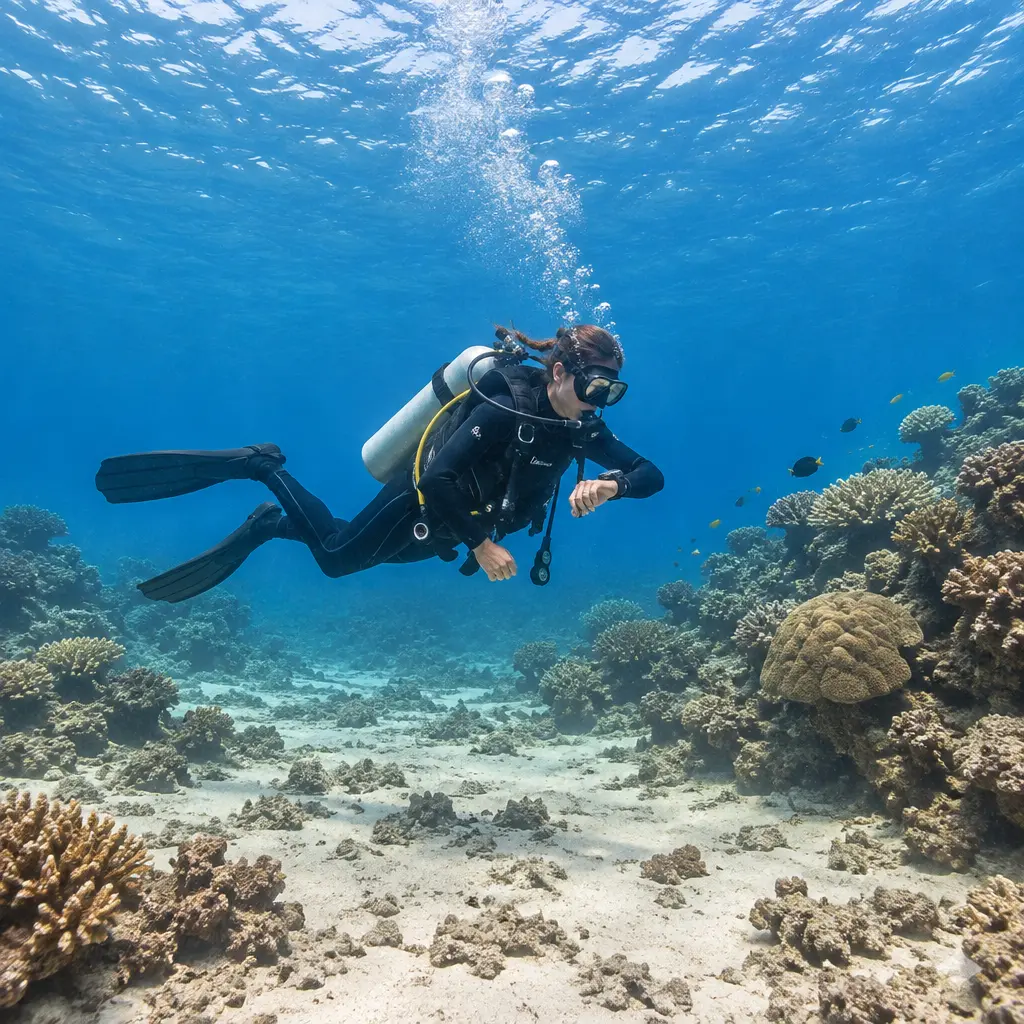
The contrast is especially noticeable when a diver hovers above a reef or sandy bottom. The body can remain nearly motionless without treading water, but poor buoyancy control can lead to unwanted ascent, descent, or contact with the environment. The National Oceanic and Atmospheric Administration (NOAA) emphasizes buoyancy control as an important part of responsible diving, including to reduce disturbance to marine habitats.
Water resistance: movement becomes slower and more deliberate
Hydrodynamic drag is the force that resists motion through water. Because water is much denser than air, moving arms and legs quickly underwater creates substantial resistance. Divers therefore commonly use slow, controlled fin kicks and keep their bodies streamlined. Swimming often involves repeated arm strokes and surface breathing; scuba movement is usually more economical because the diver is already supported by the water and must conserve breathing gas.
Equipment adds another difference. A cylinder, BCD, mask, regulator, and fins increase a diver’s mass and profile, particularly out of the water. Underwater, the equipment’s effect depends on its buoyancy and how it is configured. Divers learn to balance weight, trim, and fin technique so that they move horizontally with minimal effort instead of fighting the water or dragging equipment along the bottom.
These movement differences connect directly to breathing: exertion can increase gas consumption, so efficient propulsion is both a comfort skill and a practical way to manage a limited air supply.
Pressure and breathing make scuba feel unlike surface swimming
Water pressure increases with depth because more water lies above the diver. The Divers Alert Network (DAN) and standard diving references describe the approximate change as one additional atmosphere of pressure for every 10 meters (33 feet) of seawater, on top of the roughly one atmosphere at the surface. At 10 meters, ambient pressure is therefore about twice surface pressure; at 20 meters, it is about three times surface pressure.
This pressure change affects air-filled spaces, including the ears, sinuses, mask, and lungs. Divers equalize pressure in their ears and mask as they descend, and they must breathe continuously rather than hold their breath during ascent. These are not ordinary swimming concerns: a swimmer near the surface experiences relatively little pressure change, while a diver’s depth and ascent rate matter to both comfort and safety.
Regulator breathing: each breath is delivered at ambient pressure
A scuba regulator reduces high-pressure gas in the cylinder and delivers it to the diver at approximately the surrounding water pressure. This makes breathing possible underwater, but it can feel different from taking an unrestricted breath at the surface. The mouthpiece, regulator mechanism, and breathing resistance are noticeable, and the diver must maintain a steady, calm rhythm.
A cylinder contains a finite gas supply, so divers monitor a pressure gauge and plan their dive around gas use, depth, conditions, and a reserve for ending the dive. The U.S. National Park Service advises divers to follow training, equipment, and dive-planning practices; a diver’s actual gas consumption varies with body size, exertion, depth, equipment, and environmental conditions, so one universal “minutes per tank” figure would be misleading.
Breathing also affects buoyancy because the lungs expand and contract with each breath. A relaxed breathing pattern helps a diver make small vertical adjustments and avoid unnecessary exertion. Rapid breathing, panic, or strenuous finning can increase gas use, which is one reason scuba training places such emphasis on calm, continuous breathing.
Pressure equalization and ascent: depth requires active management
Equalization is the process of balancing pressure in body air spaces with the surrounding water pressure. During descent, divers commonly equalize their ears early and often, before discomfort develops, and allow air into the mask by gently exhaling through the nose. A blocked or painful ear is a signal to stop descending and address the pressure difference rather than force the descent.
As a diver ascends, expanding gas must be allowed to escape from the lungs and other spaces. Holding the breath while ascending is dangerous because expanding air can overexpand the lungs. DAN and recreational diving training agencies therefore teach continuous breathing and controlled ascents, following the limits and procedures appropriate to the diver’s certification and dive plan.
Pressure management helps explain why the underwater world can feel serene but never entirely passive. Even while hovering, a diver is tracking depth, breathing, gas supply, and ascent behavior.
Senses and surroundings transform the underwater experience
Scuba changes what a person sees and hears because light and sound behave differently in water than in air. A mask creates an air space in front of the eyes, while water absorbs and scatters light. Sound travels faster through water than through air, but its direction can be harder for a person to identify underwater. These sensory changes contribute to the distinctive feeling of isolation, closeness, and quiet that many divers report.
Vision: color and distance are altered underwater
Underwater objects appear closer and larger through a dive mask because light refracts at the air-water interface. Water also absorbs light, with longer wavelengths such as red disappearing more quickly than shorter blue wavelengths as depth or distance increases. NOAA’s ocean education materials describe how water’s absorption of light reduces color and visibility with depth; a dive light can restore some color locally, but it does not remove the effects of distance, turbidity, or scattering.
For example, a red object may look muted or grayish at depth until illuminated by a nearby light. Divers must also judge distance and size using altered visual cues, which can make a reef, a buddy, or the bottom seem nearer than it is. Clear water, suspended particles, and sunlight angle all influence how dramatic these changes feel.
Sound and communication: the environment feels quiet but signals matter
Sound travels at roughly 1,500 meters per second in seawater, compared with about 343 meters per second in air at room temperature, according to the National Oceanic and Atmospheric Administration. Because sound reaches both ears quickly through water and the skull, people have difficulty locating its direction. A boat or other noise may seem close even when its source is not easy to identify.
Speech is also not practical for most recreational dives. Divers rely on hand signals, gauges, and, in some settings, underwater communication devices. The steady sound of breathing through a regulator can become unusually prominent, while the absence of ordinary conversation and surface noise makes the dive feel quiet. This is one reason buddy awareness and agreed signals are essential rather than optional courtesies.
Weightlessness and orientation: the body loses familiar reference points
Water supports a diver’s body from all sides, creating a sensation of reduced weight, particularly when neutral buoyancy is achieved. Unlike swimming at the surface, a diver can move above, beside, or below the visual horizon and may hover without touching anything. Without a clear surface reference, however, it can be harder to judge orientation, depth, and direction.
This sense of three-dimensional movement is part of the appeal of scuba, but it also makes navigation and buddy contact important. Currents, low visibility, darkness, or a featureless bottom can make orientation more challenging. Divers use a compass, dive computer, landmarks, and pre-agreed plans to keep the experience controlled.
Training and dive conditions shape how different scuba feels
The sensations of scuba vary with experience, equipment, water temperature, visibility, current, depth, and workload. A calm shallow-water dive may feel like effortless hovering; a cold-water dive with thick exposure protection and a current may feel physically demanding. The same diver can experience very different conditions across a pool session, a tropical reef, and a deep or low-visibility site.
A first dive: unfamiliar equipment takes attention
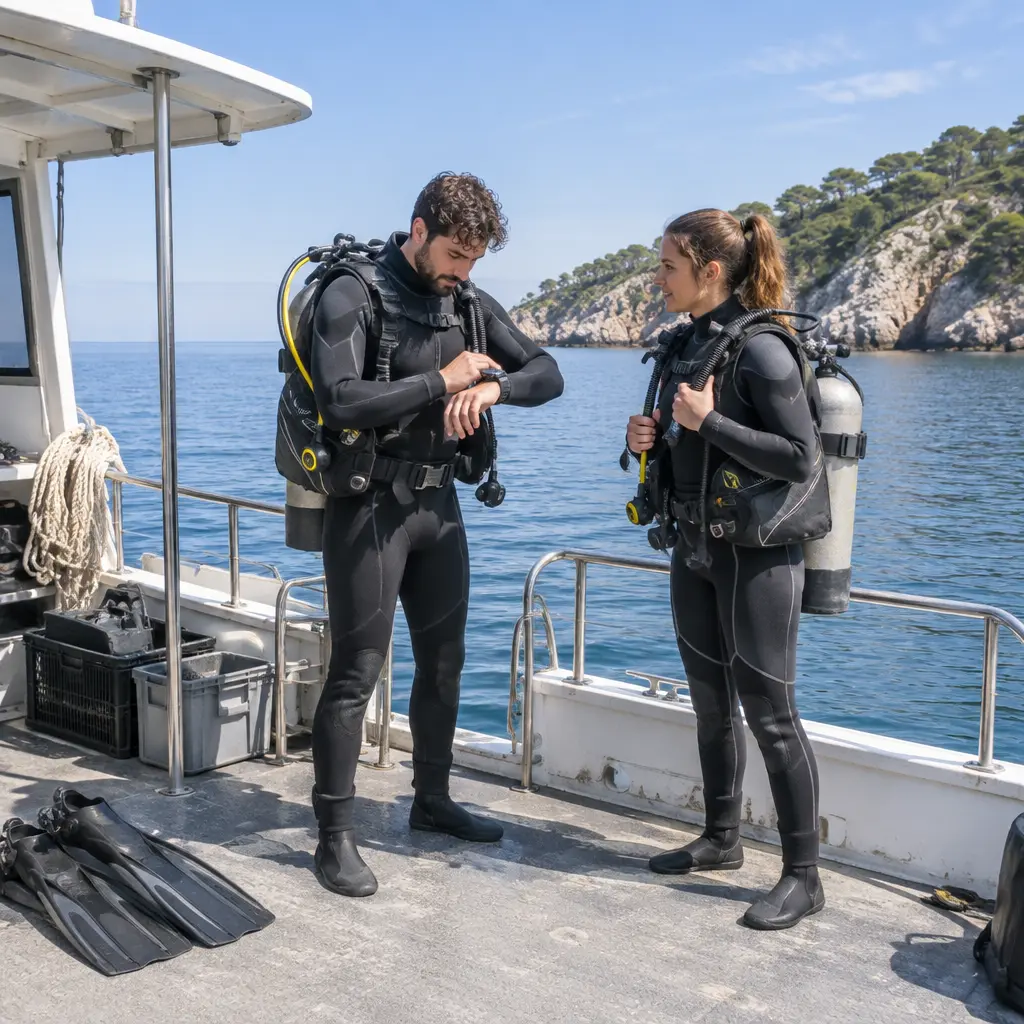
For a new diver, the regulator, mask, fins, and BCD introduce unfamiliar sensations and tasks. Breathing through a mouthpiece, clearing a mask, equalizing, and controlling buoyancy all require practice. Certified training programs teach these skills progressively in controlled conditions before divers apply them in open water. The initial experience may therefore feel less like ordinary swimming and more like learning to coordinate a new set of movements and checks.
A useful real-world comparison is a supervised introductory dive versus a relaxed dive by an experienced diver. The beginner may focus on breathing and equipment, while the experienced diver can devote more attention to the surroundings because essential habits have become familiar. Neither experience changes the underlying physics; training changes how confidently a diver manages it.
Environment and equipment: conditions change effort and comfort
A wetsuit or drysuit provides thermal protection but also changes buoyancy and required weighting. Salt water is denser than fresh water, so it provides slightly more buoyant force for the same displaced volume. Currents raise the effort needed to move, while cold can affect comfort and dexterity. Visibility influences how easily a diver sees a buddy or navigation reference, and waves can make entering and exiting the water harder even when the dive itself is calm.
These variations show why there is no single description of how scuba “should” feel. The consistent features are the need to breathe from equipment, control buoyancy, manage pressure, and move efficiently. Conditions determine how prominent each feature becomes.
Conclusion: scuba feels different because physics becomes personal
Scuba feels different from swimming because the diver is breathing through a regulator, carrying equipment, and moving through water under increasing pressure. Buoyancy replaces constant surface treading with deliberate hovering; water resistance rewards slow, efficient movement; pressure makes equalization and ascent control essential; and altered light and sound reshape perception. Together, these factors create the familiar mix of weightlessness, quiet, and heightened attention.
The differences are not just curiosities: they explain why training, buddy communication, gas planning, and controlled ascents matter. Anyone interested in diving should begin with a recognized training provider, follow local conditions and safety guidance, and avoid treating scuba as swimming with extra gear. Learning the science makes the experience more comfortable—and helps divers protect themselves and the underwater places they visit.
A simple comparison chart could summarize the experience: swimming relies on surface breathing and active strokes, while scuba relies on a regulator, buoyancy adjustments, and planned movement through three-dimensional space. For further reading, explore introductory scuba training materials and the safety education resources published by DAN, NOAA, and the National Park Service.
Sources: Professional Association of Diving Instructors (PADI), Scuba Diving Basics and Open Water Diver course materials, https://www.padi.com/; Divers Alert Network (DAN), Scuba Diving Safety and Education Resources, https://dan.org/health-medicine/; National Oceanic and Atmospheric Administration (NOAA), Ocean Facts: Sound in the Ocean, https://oceanservice.noaa.gov/facts/sound.html; National Oceanic and Atmospheric Administration (NOAA), Ocean Light and Color Education Resources, https://oceanservice.noaa.gov/education/tutorial_corals/coral05_zooxanthellae.html; National Park Service, Scuba Diving Safety, https://www.nps.gov/subjects/water/scuba-diving.htm;