
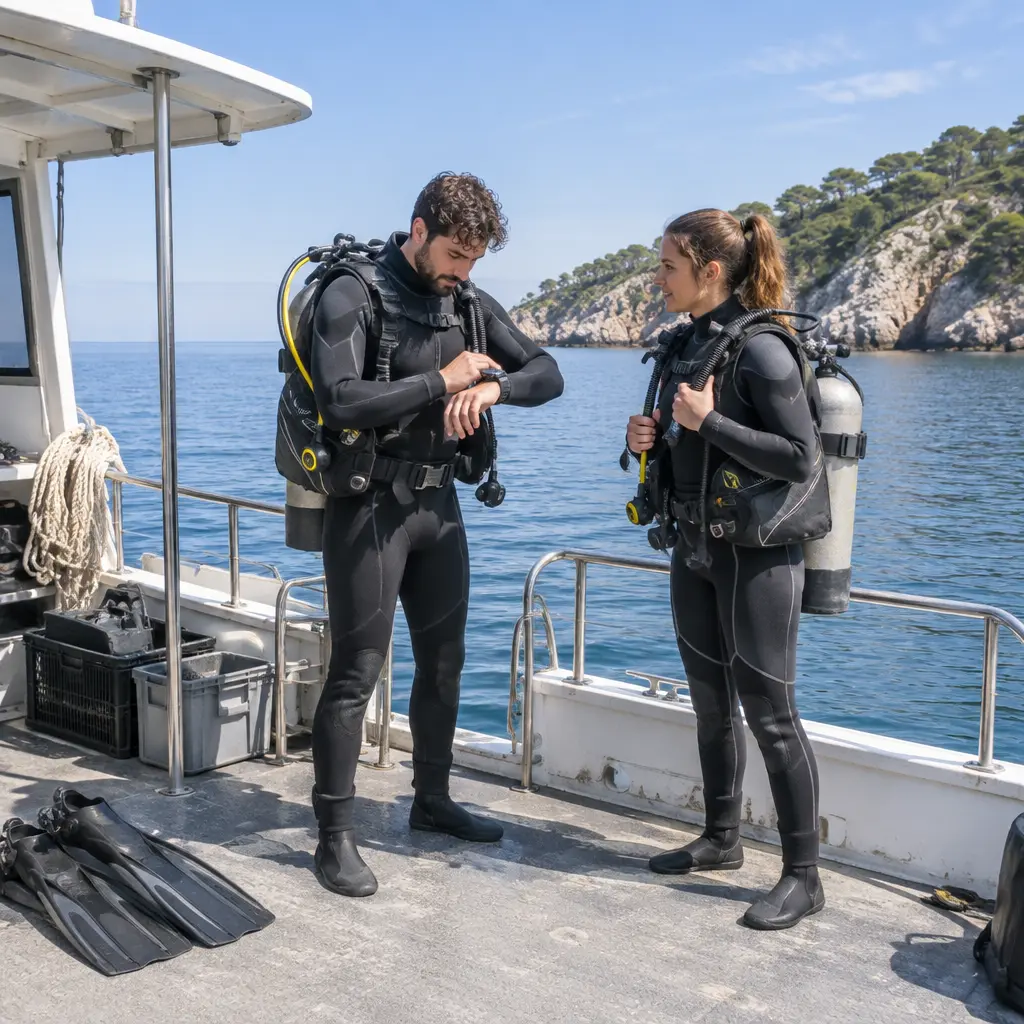
Scuba diving safety is the set of skills, equipment checks, and decision-making practices divers use to reduce risk underwater. For new divers, the essentials are to dive within training and conditions, stay with a buddy, monitor air and depth, ascend slowly, and never hold your breath. These habits matter: the Divers Alert Network (DAN) reports that many diving fatalities involve identifiable, potentially preventable factors, including problems with gas supply, buoyancy, or emergency response. Understanding training limits, pre-dive checks, underwater communication, ascent procedures, and emergency planning helps beginners build safer habits from their first dive.
Training and dive planning: the foundation of scuba safety
Scuba safety begins before entering the water. The Professional Association of Diving Instructors (PADI) describes entry-level certification as training in the knowledge and skills needed for recreational diving within specified limits; certification is not a guarantee that every dive site or condition is appropriate for a new diver. Dive planning means matching a diver’s training, experience, health, equipment, and gas supply to the site and conditions.
Dive within your training and experience
A safe dive stays within the depth, environment, and equipment limits a diver has learned to manage. A newly certified open-water diver should not assume that certification qualifies them for overhead environments such as caves or wreck interiors, strong currents, decompression diving, or complex night dives. These settings require additional training and preparation. If conditions exceed your comfort or training, choose a more suitable dive or sit it out.
Plan the dive and agree on limits
Before entry, buddies should agree on the route, maximum depth, expected bottom time, turn pressure, lost-buddy procedure, and how to end the dive. Check local conditions such as current, visibility, temperature, and entry or exit hazards with a qualified local operator or guide. DAN emphasizes that a plan should include a clear response to foreseeable problems—not just a destination and maximum depth. If the plan changes, communicate and adjust conservatively.
Use a buddy and complete a pre-dive check
The buddy system pairs divers so they can monitor one another and assist in an emergency. Stay close enough to see and reach your buddy, agree on hand signals, and check in during the dive. Before entering, use a structured equipment check—often taught as BWRAF by PADI—to review buoyancy control device, weights, releases, air, and final check. Confirm that the cylinder valve is open, the regulator works, and the pressure gauge shows an adequate supply. A buddy check is useful only when both divers actively verify the equipment.
Equipment and underwater practices: controlling common risks
Once the plan and gear are ready, safe diving depends on calm, deliberate habits underwater. Buoyancy control, gas monitoring, and clear communication help prevent small difficulties from becoming emergencies.
Maintain buoyancy and protect your air supply
Buoyancy control is the ability to manage floating, hovering, and sinking by adjusting breathing, weighting, and the buoyancy control device. Poor control can lead to rapid depth changes, exhaustion, accidental contact with the bottom, or damage to marine life. Use only the weight needed to achieve proper buoyancy, make small adjustments, and practice hovering with an instructor or experienced guide.
Check your pressure gauge regularly and keep enough gas to return, complete the ascent, and handle a reasonable contingency. Agree on a turn pressure with your buddy before the dive; do not wait for the gauge to approach empty before ending the dive. DAN’s accident analyses frequently identify gas-supply problems as a factor in diving incidents, reinforcing the value of early monitoring and conservative reserves.
Breathe continuously and ascend slowly
Never hold your breath while scuba diving. As surrounding pressure decreases during ascent, expanding air in the lungs can cause serious injury if it cannot escape. Breathe continuously and ascend at a controlled rate taught in your training. Recreational training agencies commonly teach a maximum ascent rate of about 18 metres (60 feet) per minute, but slower ascents are generally easier to control; follow your computer, training agency, and dive plan. Make a safety stop when appropriate and when conditions allow, but do not treat a stop as a substitute for a controlled ascent.
Communicate and respond calmly
Underwater communication uses agreed hand signals, eye contact, and attention to a buddy’s behavior and equipment. Review signals for “OK,” “problem,” “up,” and low air before entry. If separated, follow the procedure agreed during the briefing rather than searching indefinitely; many training programs teach a brief, controlled search followed by surfacing if the buddy is not found. If you feel anxious, signal your buddy, stop, stabilize your breathing and buoyancy, and end the dive if needed. Do not let embarrassment override a safety decision.
Health, emergencies, and after-dive safety
Good judgment also means recognizing when not to dive and knowing what to do if a problem occurs. Health screening, emergency readiness, and conservative post-dive choices are part of the same safety system as equipment checks and underwater skills.
Assess fitness to dive
Diving can place demands on breathing, circulation, temperature regulation, and physical effort. Do not dive when ill, unusually fatigued, impaired by alcohol or recreational drugs, or unable to manage the expected conditions. Some medical conditions and medications may affect diving fitness; disclose relevant history and seek advice from a physician familiar with diving medicine when uncertain. The Divers Alert Network recommends discussing health concerns with a qualified medical professional rather than relying on a buddy or dive operator to diagnose them.
Know the emergency plan and seek help promptly
Before the dive, identify how to contact emergency services, where oxygen and first-aid supplies are located, and how an injured diver will be transported. If a diver has a possible decompression-related injury or another serious post-dive symptom, stop diving, provide emergency oxygen if trained and available, and seek urgent medical care. DAN’s global emergency hotline can help coordinate diving-related medical assistance; local emergency services remain the priority for immediate life-threatening situations.
Respect surface intervals and no-fly guidance
A surface interval lets the body eliminate some of the nitrogen absorbed during a dive, but it does not make every subsequent activity immediately safe. Follow your dive computer and training guidance for repetitive dives, and avoid flying too soon after diving. DAN’s commonly cited guidance is a minimum preflight interval of 12 hours after a single no-decompression dive and 18 hours after multiple dives or multiple days of diving; longer intervals may further reduce risk. If your computer, operator, or medical professional gives more conservative advice, follow it.
Conclusion: make conservative habits part of every dive
Scuba safety rests on connected practices: train for the conditions, plan with a buddy, check equipment, control buoyancy and air use, breathe continuously, ascend slowly, and take health concerns seriously. Emergency preparation and appropriate surface intervals complete the picture. No checklist removes all risk, but consistent, conservative decisions make problems less likely and easier to manage. New divers should review these basics with a certified instructor, follow local briefings, and continue building experience gradually rather than pushing limits.
Sources: Divers Alert Network, Annual Diving Report, https://dan.org/research-reports/research-studies/annual-diving-report/; Divers Alert Network, Diving After Flying, https://dan.org/health-medicine/health-resources/diseases-conditions/flying-after-diving/; Divers Alert Network, Emergency Hotline, https://dan.org/about-dan/contact/; Professional Association of Diving Instructors, Open Water Diver Course, https://www.padi.com/courses/open-water-diver; Professional Association of Diving Instructors, BWRAF Pre-Dive Safety Check, https://blog.padi.com/bwraf/


