Costly Mistakes Divers Make Around Marine Life
Diving is an extraordinary way to explore underwater ecosystems, giving divers proximity to diverse marine life. However, unintentional mistakes by divers can lead to severe consequences for marine wildlife and fragile habitats. Understanding these costly mistakes and learning how to avoid them is crucial to preserving underwater biodiversity. According to a 2022 report by the United Nations Environment Programme (UNEP), coral reefs attract over 100 million divers globally, yet nearly 20% of reefs suffer damage directly attributed to unsustainable diving practices. This article will explore common harmful behaviors by divers, including touching or chasing wildlife, damaging coral reefs, poor buoyancy control, and irresponsible photography techniques, as well as actionable ways to mitigate these impacts.
Physical Contact and Disturbance: Diver Impact on Marine Life
Physical contact between divers and marine organisms encompasses any intentional or accidental touching, chasing, or harassing of wildlife. Dr. Sylvia Earle, a renowned marine biologist, defines diver impact on marine life as “any alteration in behavior or physical state of organisms caused directly by diver presence or interaction.” Key characteristics of this impact involve stress responses in animals, increased vulnerability to predators, and physical injury to coral and fauna.
Hyponyms under this umbrella include coral breakage, fish displacement, and disruption of breeding activities. For instance, fish disturbed by divers often flee their habitats, which can affect feeding and reproduction cycles.
Understanding physical impact provides a foundation for addressing other issues such as buoyancy control and environmental damage, making it a critical first step in comprehensive diver education.
Touching and Chasing Marine Wildlife
Touching or chasing marine creatures causes stress, illness, or injury. Marine species have sensitive protective layers; for example, corals have a mucus coating that divers can damage by contact, increasing susceptibility to disease. According to a study by the Marine Conservation Society (2019), 35% of coral injuries in high-traffic dive sites were traced to direct human contact.
Chasing animals disrupts natural behaviors, often forcing them to expend energy unnecessarily. The International Union for Conservation of Nature (IUCN) notes many species exhibit avoidance behaviors that reduce feeding opportunities when repeatedly disturbed.
Coral Reef Damage from Physical Contact
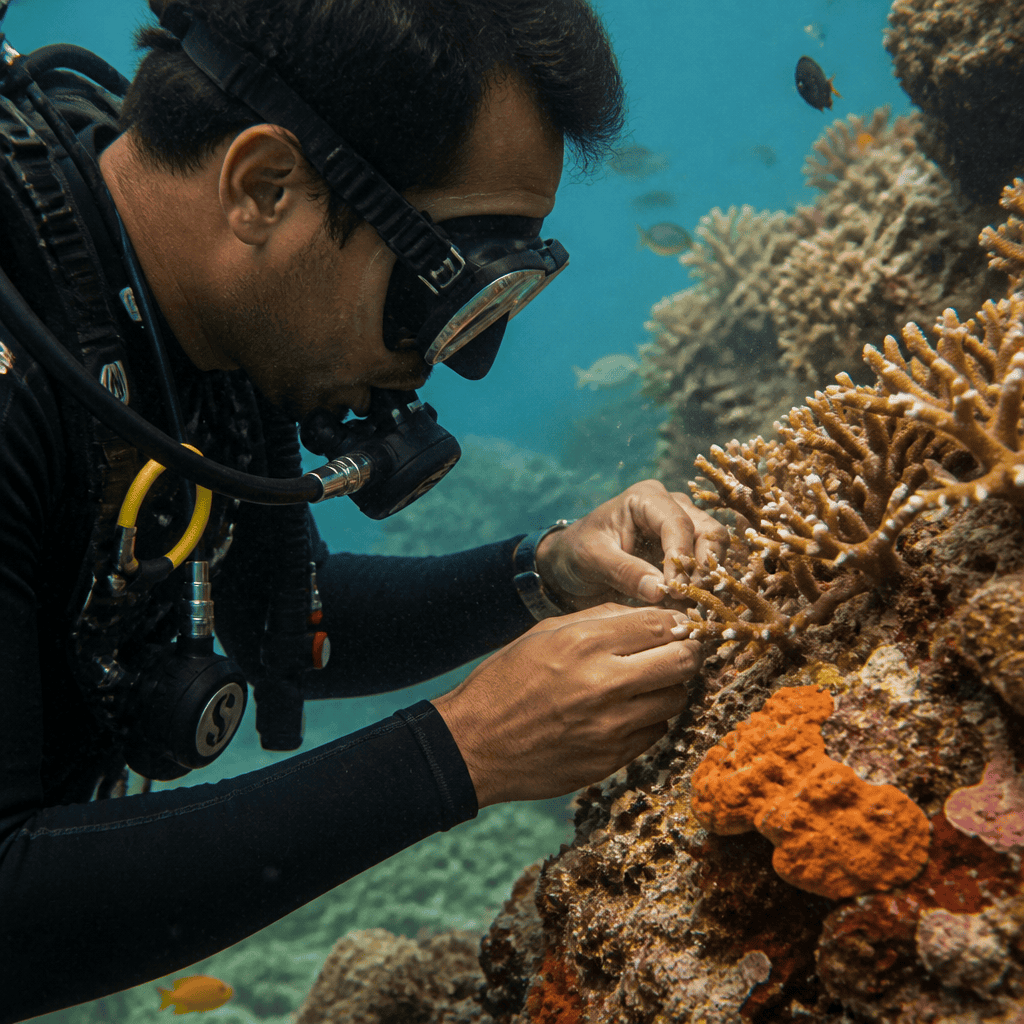
Coral reefs are vulnerable ecosystems that provide habitat for over 25% of marine species. The Global Coral Reef Monitoring Network (GCRMN) reported that diver contact accounts for approximately 15% of coral reef degradation worldwide. Common damage includes breakage from fins, hands, or equipment, causing structural harm that can take decades to heal.
Poor Buoyancy Control: Diver Influence on Habitat Integrity
Buoyancy control refers to a diver’s ability to maintain neutral buoyancy underwater, avoiding unintended contact with the environment. It is a critical skill defined by PADI (Professional Association of Diving Instructors) as essential for minimizing diver impact. Poor buoyancy leads to accidental collisions with seabed, corals, and marine organisms.
Hyponyms include uncontrolled sinking, kicking up sediment, and gear dragging, all of which negatively affect visibility and ecosystem health.
Mastering buoyancy is foundational; it connects directly with minimizing physical contact and avoiding damage to habitats.
Unintended Contact Through Poor Buoyancy
Divers with poor buoyancy often inadvertently touch coral or stir up sediment. This sediment clouding—called turbidity—can smother corals by blocking sunlight essential for photosynthesis. Studies from the Great Barrier Reef Marine Park Authority (2020) indicate sedimentation from divers’ fins can reduce coral growth rates by 25%.
Gear Impact and Dragging
Diving fins, tanks, or gauges that drag across reefs cause physical damage and break fragile structures. A case study from Bonaire’s Marine Park (2018) observed that poorly secured equipment accounted for 12% of reef damage at high-use dive sites.
Irresponsible Photography and Flash Usage: Effects on Marine Behavior
Underwater photography, while popular, can disrupt marine life through light and close proximity. Flash photography, in particular, has been shown to disturb fish and invertebrates, altering natural behaviors. Dr. Alex Mustard, a marine ecologist, describes this as a “visual stressor” that can cause avoidance, reduced feeding, and even spawning disruption.
Hyponyms include excessive flash use, intrusive approaches, and multiple attempts that increase disturbance duration.
Managing photography practices complements efforts to reduce physical contact and habitat disturbance.
Flash Photography and Animal Stress
Research published in Marine Ecology Progress Series (2017) indicates that repetitive flashes can increase cortisol levels in fish, a stress hormone that impairs immune function. Species such as nudibranchs and seahorses are particularly sensitive to bright lights, often retreating into shelter when exposed.
Close Approaches for Photos
Getting too close to animals to capture images can be perceived as a threat, prompting escape behaviors that drain energy. A study by Reef Check Foundation (2021) noted that divers approaching within one meter of fish caused a 40% decline in observed feeding activity during dives.
Mitigation Strategies: Best Practices for Minimizing Diver Harm
Adopting informed diving behaviors reduces harm to marine life. The Reef Environmental Education Foundation (REEF) promotes techniques like maintaining buoyancy, avoiding contact, respecting wildlife distance, and using non-intrusive photography methods.
These mitigation strategies can be grouped into education, skill development, and awareness raising. Combined, they not only protect ecosystems but enhance diver safety and enjoyment.
Buoyancy Training and Equipment Checks
Courses emphasizing buoyancy skills allow divers to float effortlessly without touching the environment. Regular equipment checks prevent dragging and accidental contact. Agencies like PADI report a 30% reduction in reef damage at sites where advanced buoyancy workshops are mandatory.
Respectful Wildlife Interaction Guidelines
Maintaining a distance of at least 2-3 meters from marine animals minimizes stress and behavioral disruption. Organizations such as Project AWARE advocate for “look but don’t touch” ethics, better supported by informational signage and dive briefings.
Responsible Photography Practices
Using natural light or red filters instead of flash reduces visual disturbance. Planning shots with minimal approaches and limiting flash frequency support animal wellbeing. Underwater photographers supported by the Ocean Agency highlight these practices in their conservation campaigns.
Conclusion
The costly mistakes divers make around marine life—ranging from physical contact and poor buoyancy to intrusive photography—have profound implications on underwater ecosystems. These behaviors lead to coral damage, wildlife stress, altered natural behaviors, and habitat degradation. By understanding the nature of these mistakes and adopting best practices such as buoyancy control, maintaining respectful distance, and using responsible photography methods, divers can play a pivotal role in conserving marine biodiversity. Protecting the underwater world requires ongoing education, awareness, and mindful diving, ensuring that this remarkable environment thrives for future generations to explore and cherish.